MCQs
Set 1
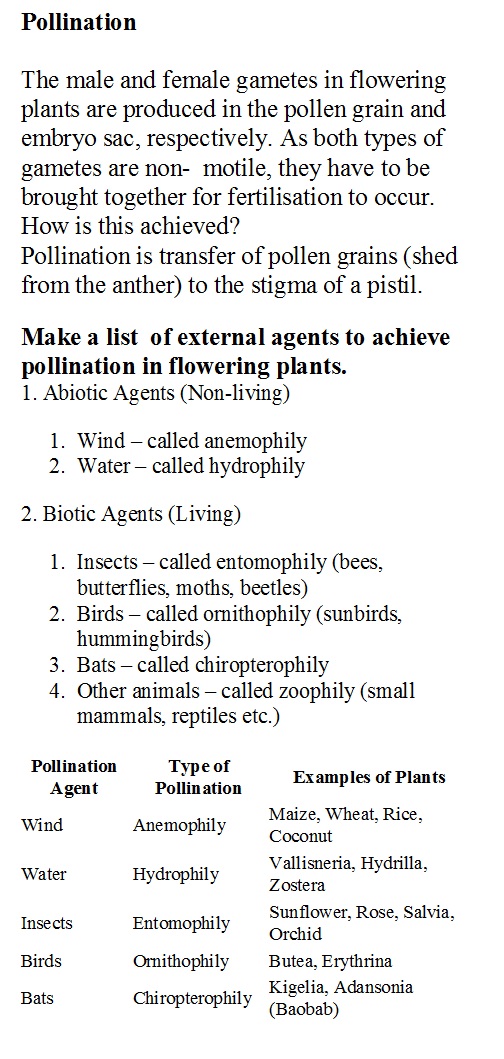
1. Pollination is defined as:
A. Fusion of male and female gametes
B. Transfer of pollen from anther to stigma
C. Formation of seed
D. Germination of pollen grain
2. Which of the following is an abiotic agent of pollination?
A. Insects
B. Birds
C. Wind
D. Bats
3. Pollination by wind is called:
A. Hydrophily
B. Entomophily
C. Anemophily
D. Zoophily
4. Which plant is pollinated by water?
A. Rose
B. Sunflower
C. Vallisneria
D. Wheat
5. Pollination by insects is known as:
A. Zoophily
B. Entomophily
C. Hydrophily
D. Anemophily
6. Which of the following is an example of anemophilous plant?
A. Orchid
B. Coconut
C. Rose
D. Salvia
7. Birds help in pollination known as:
A. Chiropterophily
B. Entomophily
C. Ornithophily
D. Hydrophily
8. Chiropterophily refers to pollination by:
A. Insects
B. Bats
C. Birds
D. Wind
9. Which pollination agent is most common in flowering plants?
A. Wind
B. Water
C. Insects
D. Bats
10. Which of the following is NOT a biotic agent?
A. Birds
B. Wind
C. Insects
D. Bats
11. Which of the following combinations is correctly matched?
A. Anemophily ‐ Bright coloured flowers
B. Hydrophily ‐ Presence of nectar
C. Entomophily ‐ Sticky pollen grains
D. Ornithophily ‐ Small, inconspicuous flowers
12. In wind-pollinated plants, pollen grains are usually:
A. Heavy and sticky
B. Light and non-sticky
C. Large and spiny
D. Covered with nectar
13. Which of the following is NOT a characteristic of hydrophilous pollination?
A. Pollen grains are protected by mucilage
B. Flowers are brightly coloured
C. Pollination occurs in water
D. Male flowers may float
14. In Vallisneria, pollination occurs when:
A. Pollen is carried by insects
B. Male flowers reach water surface and contact female flowers
C. Wind carries pollen underwater
D. Bats transfer pollen
15. Which feature is most suitable for insect pollination?
A. Dry stigma
B. Odourless flowers
C. Presence of nectar guides
D. Smooth pollen grains
16. Select the correct statement:
A. All aquatic plants show hydrophily
B. Wind pollination requires attractive flowers
C. Majority of plants use biotic agents
D. Hydrophily is more common than entomophily
17. Which of the following adaptations is seen in anemophilous flowers?
A. Sticky stigma and large petals
B. Exposed stamens and feathery stigma
C. Nectar secretion and fragrance
D. Bright coloured petals
18. In chiropterophily, flowers are usually:
A. Small and odourless
B. Nocturnal and strongly scented
C. Submerged in water
D. Green and inconspicuous
19.Assertion (A): Wind-pollinated flowers produce large quantities of pollen.
Reason (R): Probability of pollen reaching stigma is low.
A. Both A and R are true, and R explains A
B. Both A and R are true, but R does not explain A
C. A is true, R is false
D. A is false, R is true
20. Which of the following is incorrectly matched?
A. Maize ‐ Anemophily
B. Zostera ‐ Hydrophily
C. Orchid ‐ Anemophily
D. Butea ‐ Ornithophily
21. Which statement is correct regarding hydrophily?
A. It is common in most aquatic plants
B. Pollen grains are always spherical and smooth
C. It is quite rare among flowering plants
D. Pollination always occurs on water surface
22. In wind-pollinated plants, which factor is LEAST important?
A. High pollen production
B. Exposed anthers
C. Bright coloured petals
D. Feathery stigma
23. Which of the following pairs is wrongly matched?
A. Vallisneria ‐ Epihydrophily
B. Zostera ‐ Hypohydrophily
C. Maize ‐ Entomophily
D. Salvia ‐ Entomophily
24. Assertion (A): Most flowering plants use animals for pollination.
Reason (R): Abiotic pollination is more efficient than biotic pollination.
A. Both A and R are true, R explains A
B. Both A and R are true, but R does not explain A
C. A is true, R is false
D. A is false, R is true
25. Which adaptation is specifically for preventing pollen wastage in anemophily?
A. Production of nectar
B. Sticky pollen grains
C. Synchronised flowering
D. Large petals
26. In entomophilous flowers, pollen grains are generally:
A. Smooth and dry
B. Light and winged
C. Sticky and spiny
D. Ribbon-like
27. Which of the following is NOT a feature of zoophilous flowers?
A. Nectar secretion
B. Fragrance
C. Dull coloration always
D. Sticky pollen
28. In Vallisneria, pollination is completed by:
A. Water currents carrying pollen underwater
B. Male flowers reaching the surface and contacting female flowers
C. Wind action on submerged flowers
D. Insects visiting aquatic flowers
29. Which condition favours evolution of wind pollination?
A. Dense forest with low wind
B. Open habitats with large populations
C. Scarcity of pollen
D. Presence of nectar